Cordyceps sinensis — a legendary high-altitude mushroom and its evidence-based power for health and energy
Cordyceps sinensis — a mushroom born in extreme conditions
Cordyceps sinensis (the current official name is Ophiocordyceps sinensis) grows at altitudes above 3,600–4,000 m. This environment is characterized by minimal oxygen levels, sharp temperature fluctuations, and high ultraviolet radiation. Such conditions force the mushroom to produce unique biologically active compounds, which determined its reputation in traditional Eastern medicine. For centuries, it has been used in Tibet, China, Korea, and Japan to strengthen vital energy, support recovery after illness, and maintain lung, kidney, heart, and immune function. It is often called the “gold of the Himalayas” — not only because of its rarity, but also due to its exceptionally broad spectrum of effects, now confirmed by dozens of modern laboratory and clinical studies.

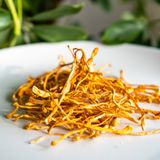
Cordyceps sinensis
The mushroom goes through three stages of development: infection of the larva, parasitism inside it, and external growth as a fruiting body. This unusual life cycle forms the well-known concept of the “winter insect — summer grass” described in ancient pharmacopoeias.
Chemical composition: why Cordyceps acts so powerfully
Scientific research shows that Cordyceps sinensis contains more than 20 groups of bioactive compounds, and it is their synergy that shapes the mushroom’s unique therapeutic profile.
The most important components of C. sinensis include:
- 🔹 Adenosine — a quality marker in pharmacopoeias and a regulator of cellular energy and microcirculation.
Adenosine activates A1/A3 receptors, resulting in vasodilatory, cardioprotective, and pronounced anti-angiogenic effects in tumors. It also reduces inflammation and stabilizes cell membranes, enhancing the antitumor and immunomodulatory effects of cordyceps (Liu et al., 2022).
- 🔹 Cordycepin (3’-deoxyadenosine) — the most well-known molecule of Cordyceps.
Cordycepin blocks RNA synthesis in cancer cells, inhibits their proliferation, activates caspases, and induces apoptosis (the natural death of damaged or unnecessary cells). It also affects energy metabolism, inflammation, and hormonal balance, including stimulation of steroidogenesis (Olatunji et al., 2018, Liu et al., 2022).
👉Also read the article: Cordycepin from Cordyceps militaris in the fight against the COVID virus
- 🔹 β-glucans and other polysaccharides — powerful immunomodulators
Polysaccharides activate macrophages, NK cells, and T lymphocytes, enhancing antitumor immune responses. They also exhibit antioxidant properties, reduce chronic inflammation, and protect the liver and kidneys. This is one of the key components responsible for holistic recovery of the body (Yuan et al., 2022).
- 🔹 Ergosterol and other sterols — direct anticancer and anti-inflammatory agents
These are compounds that are often overlooked, yet they are extremely important in Cordyceps.
Sterols trigger apoptosis of tumor cells via caspases 3/7/9; reduce inflammation; exert anti-atherosclerotic effects by lowering lipid oxidation; stabilize neuronal membranes and act as neuroprotectors; and participate in immune regulation. This makes sterols one of the key components enhancing the systemic action of cordyceps — from immune support to cardiovascular protection (Bok et al., 1999, Das et al. 2021).
- 🔹 Cyclic peptides, flavonoids, polyketides
These molecules act as antioxidants, antimicrobial, and anti-inflammatory agents. They complement the effects of adenosine and cordycepin, enhancing cellular protection against damage and stress (Olatunji et al., 2018).
Unlike most medicinal mushrooms, Cordyceps sinensis affects multiple body systems simultaneously — energy, hormonal, immune, nervous, and cardiovascular. This is why in Eastern medicine it is included in recovery protocols after exhaustion, infections, stress, and age-related changes.
What makes Cordyceps sinensis so effective
1. Immunomodulation: fine regulation rather than “blind stimulation”
• Increases the production of IL-1β, IL-2, IL-6, IL-10, TNF-α. This means that the mushroom activates key immune signaling molecules, helping the body respond more rapidly to infections.
• Activates macrophages and enhances phagocytosis. Cordyceps helps immune cells more effectively destroy bacteria and viruses.
• Increases NO synthesis via iNOS. Elevated nitric oxide improves pathogen elimination and supports normal immune cell function.
• Regulates MAPK inflammatory pathways. The mushroom controls intracellular inflammatory mechanisms, reducing excessive responses and preventing autoimmune overactivation.
Importantly, the mushroom does not simply “boost” immunity — it balances immune function by suppressing excessive inflammation while strengthening weakened links. (Das et al. 2021)
📌 Useful for: chronic infections, immune weakness, post-illness exhaustion, frequent upper respiratory infections.
👉 And also pay attention to the article "Impact of Cordyceps militaris on Immunity"
2. Antioxidant activity and cellular protection
• Increases levels of SOD, GPx, and GSH. This enhances the body’s natural antioxidant enzymes that protect cells from damage and premature aging.
• Reduces lipid peroxidation. Cordyceps prevents free-radical-induced destruction of cell membranes, reducing inflammation and oxidative stress.
• Stabilizes mitochondrial membranes. Protects the cell’s “power stations,” supporting endurance and normal cellular function.
(Yuan et al., 2022)
📌 Useful for: chronic stress, intoxications, exposure to polluted air, age-related changes, chronic fatigue syndrome.
3. Anticancer activity
• Triggers apoptosis. Cordyceps activates the natural self-destruction mechanism of cancer cells, inhibiting their proliferation.
• Blocks the cell cycle. The mushroom interferes with tumor cell division, slowing or completely stopping their growth.
• Suppresses angiogenesis. Reduces the formation of new blood vessels, without which tumors cannot grow or receive nutrients.
• Activates immune responses. Enhances the immune system’s ability to recognize and destroy cancer cells.
• Reduces metastasis. Inhibits the spread of tumor cells to other organs.
(Liu et al., 2022; Olatunji et al., 2018, Shashidhar 2013)
📌 Important for: support during oncological therapy, chronic inflammatory processes, high risks of tumor development.
4. Antidiabetic activity
• Lowers blood glucose levels. Cordycepin and polysaccharides help control blood sugar by reducing excessive postprandial spikes.
• Increases insulin sensitivity. Cells respond better to insulin, which is critical in insulin resistance and type 2 diabetes.
• Reduces oxidative damage to β-cells. Protects pancreatic insulin-producing cells from stress and destruction.
• Improves lipid profile. Cordyceps lowers levels of “bad” fats in the blood, which is important for metabolic health.
(Wang & Shiao, 2000, Yuan et al., 2022)
📌 Useful for: type 2 diabetes, insulin resistance, metabolic syndrome, obesity.
5. Liver protection
• Reduces inflammation. Cordyceps suppresses inflammatory molecules, protecting liver tissue from damage.
• Reduces fibrosis. Inhibits the formation of connective tissue and scarring that occur in chronic liver injury.
• Promotes hepatocyte regeneration. Supports liver cell regeneration and improves overall liver function.
(Liu et al., 2022, Shashidhar 2013)
📌 Useful for: toxic liver damage (alcohol, medications), steatosis, chronic inflammation, and recovery after intoxication.
6. Kidney support and protection
• Reduces drug-induced toxicity. C. sinensis mitigates the nephrotoxic effects of drugs such as cyclosporine, protecting renal tissue from damage.
• Suppresses inflammatory cytokines. Cordyceps reduces levels of inflammatory molecules that play a key role in the progression of kidney disease.
• Protects glomeruli. Helps preserve the structure and function of renal glomeruli, preventing filtration disorders.
(Yuan et al., 2022, Shashidhar 2013)
📌 Useful for: chronic kidney disease, diabetic nephropathy, drug-induced toxicity, inflammatory kidney conditions.
7. Cardiovascular system
• Lowers blood pressure. Adenosine and cordycepin promote relaxation of vascular walls, helping to naturally normalize blood pressure.
• Dilates blood vessels. Improves blood flow and oxygen delivery to tissues, which is especially important during physical exertion and stress.
• Improves microcirculation. Cordyceps enhances blood flow in small capillaries, providing better cellular nutrition.
• Reduces platelet aggregation. Lowers the risk of microthrombus formation and improves blood rheology.
(Lo et al., 2013, Olatunji et al., 2018, Shashidhar 2013, Holliday & Cleaver 2008)
📌 Useful for: stress нагрузках, hypoxia, elevated blood pressure, impaired circulation, and risks of vascular spasms.
8. Antidepressant and adaptogenic effects
• Regulates cortisol levels. Cordyceps helps stabilize the stress hormone, reducing feelings of anxiety and overload.
• Increases BDNF levels. This neurotrophic factor supports neuronal health, improves mood, and promotes nervous system recovery.
• Reduces anxiety-related inflammatory cytokines. The mushroom decreases neuroinflammation, which often accompanies chronic stress and depressive states.
(Shashidhar 2013, Olatunji et al., 2018, Das et al. 2021)
📌 Useful for: chronic stress, fatigue, emotional exhaustion, anxiety states.
9. Neuroprotection and brain support
• Suppresses inflammation in neuroglia. Cordyceps reduces microglial activation — the main drivers of neuroinflammation in the brain.
• Reduces neurotoxic cytokines. Helps decrease inflammatory signals that damage nerve cells.
• Reduces Aβ production. Decreases the formation of amyloid proteins associated with Alzheimer’s disease.
• Protects against oxidative stress. Blocks free-radical-induced neuronal damage.
• Improves neuroplasticity. Supports brain adaptation, formation of new connections, and recovery after stress or injury.
(Olatunji et al., 2018, Sharma et al., 2024)
📌 Promising for: Alzheimer’s disease, Parkinson’s disease, age-related cognitive decline, chronic stress, and mental fatigue.
👉Learn more: Lion’s mane (Hericium erinaceus): properties, benefits for the brain and nervous system
10. Potent anti-inflammatory activity
• Blocks NF-κB. Cordycepin and sterols inhibit one of the key cellular “switches” of inflammation.
• Reduces NO, TNF-α, IL-1β. These molecules are key inflammatory mediators, and their reduction promotes faster tissue recovery.
• Suppresses iNOS and COX-2. Inhibits enzymes that trigger inflammatory responses and pain.
(Shashidhar 2013, Olatunji et al., 2018, Das et al. 2021)
📌 Important for: chronic inflammation, autoimmune processes, tissue damage, and recovery after injuries or surgery.
Conclusion: why Cordyceps sinensis remains one of the most unique medicinal mushrooms in the world
Cordyceps sinensis is a rare example of a natural remedy that simultaneously affects several critically important systems of the body. Modern research confirms what Eastern medicine has known for centuries: this mushroom does not work in a narrow, targeted way, but rather acts comprehensively, “adapting” to the needs of the organism.
Its uniqueness lies in the combination of bioactive molecules that are not found at such concentrations in any other mushroom: cordycepin, adenosine, potent polysaccharides, sterols, and peptides. Each of these compound groups acts through its own mechanism: some regulate immunity, others reduce inflammation, others restore cells, and others support energy metabolism and brain function. Together, they create an effect that cannot be assigned to a single category — it is a molecular synergy operating at the level of the entire human biosystem.
C. sinensis is valued for its ability to support the body where it is depleted. It cannot be described simply as an “adaptogen” or an “immunomodulator” — it functions as a comprehensive regulator that helps the body return to physiological balance.
The path this mushroom takes to reach humans is particularly impressive. Wild Cordyceps sinensis grows high in the Himalayas under extremely harsh conditions and is harvested exclusively by hand. Each specimen is the result of several years of a natural life cycle, which is why the mushroom was traditionally more expensive than gold. The high price is not accidental: it is difficult to harvest, even harder to find, and the concentration of bioactive compounds in wild specimens is truly exceptional.
And most importantly, in most cases the results justify both the rarity and the price.
That is why Cordyceps sinensis remains today one of the most valuable mushrooms in traditional Eastern medicine and one of the most intriguing subjects of modern scientific research. Its potential is only beginning to be revealed — and everything indicates that we are dealing with a unique natural resource capable of delivering tangible results where other remedies no longer work.
You can order Cordyceps sinensis and other healing mushrooms in our store.
This information is provided for informational purposes only and is not medical advice. Consult your doctor before taking any supplements.
❓ Frequently Asked Questions about Cordyceps sinensis
1. How does Cordyceps sinensis differ from Cordyceps militaris?
Cordyceps sinensis contains higher levels of adenosine and more complex sterols, while C. militaris has a higher concentration of cordycepin. Both are effective, but they act differently.
2. Can Cordyceps be taken daily?
Yes, studies confirm the safety of daily use for 2–6 months. The mushroom has a cumulative effect.
3. Is Cordyceps suitable for athletes?
Yes. It improves cellular oxygen saturation, increases endurance, and accelerates recovery after physical exertion.
4. Does Cordyceps help with stress and anxiety?
Yes, due to cortisol regulation, reduction of neuroinflammation, and increased BDNF levels, Cordyceps has a pronounced anti-stress effect.
5. Can Cordyceps be taken in autoimmune diseases?
Yes, because it does not stimulate the immune system but balances it. However, consultation with a physician is recommended.
For each client individually, we draw up instructions according to his indicators and requests
Monthly course:
Other articles on the topic:
- What is the difference between dried mushroom and extract?
- Properties of Cordyceps militaris.
- Effect of Cordyceps militaris mushroom on vascular health
Contact us: