Anti-parasite complex: how plant extracts work and why recovery is needed
When people look for a natural remedy against parasites, they most often think of only one action – “cleansing.” But an antiparasitic course should not be reduced only to bitter herbs. It is important for the body not only to receive plant components with antiparasitic potential, but also to support digestion, the mucous membrane of the gastrointestinal tract, and the liver during the course.
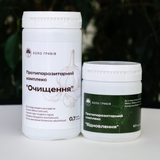
The Anti-parasite complex from Kolo Grybiv is built in two directions: antiparasitic support + recovery of the body. The first block contains plant extracts of garlic, clove, black walnut, and wormwood. The second block contains lemon balm and milk thistle – components that help make the course gentler for the digestive system and support the liver.
This is not an ordinary mixture of dried herbs in the classical sense. The formula is built on extracts, that is, a more concentrated and predictable form of plant raw material. This approach is important because in ordinary powders and dried herbs, the amount of active substances can vary greatly from batch to batch.
In this article, we will examine why, for an antiparasitic course, not only action against parasites is important, but also support of the body: how garlic, clove, wormwood, and black walnut work, why lemon balm and milk thistle are added to the formula, and why extracts may be a better choice than ordinary herbal blends.
You can view the composition, capsule format, and intake regimen on the product page: Anti-parasite complex from Kolo Grybiv
Why dried herbs against parasites are often ineffective
Bitter herbs, spices, and plant tinctures have long been used for antiparasitic support. There is logic in this: wormwood contains bitter sesquiterpenes, clove contains eugenol, garlic contains sulfur-containing compounds, and black walnut contains juglone. Each of these plants has active substances that have been studied in the context of their effect on parasites.
The problem begins when we are talking not about extracts, but about ordinary dried herbs. The amount of active substances in such raw material is often unpredictable. It depends on the place of cultivation, harvest time, drying method, storage conditions, and the quality of the plant itself. Two mixtures that look identical may have completely different strengths of action.
Because of this, popular blends such as “triad” often create more of a feeling of an active course than provide a stable and predictable result. There is a bitter taste, there is the smell of herbs, and there may also be a feeling of “cleansing.” But this does not yet mean that the body is receiving a sufficient amount of active substances in a predictable dose.
In scientific studies, researchers usually study not a teaspoon of dried herb, but concentrated forms: aqueous, alcoholic, methanolic, or other extracts. This format allows for a higher concentration of active compounds and a more accurate assessment of which substance works, at what dose, and against which groups of parasites it was studied.
This complex from Kolo Grybiv is built not on an ordinary mixture of dried herbs, but on plant extracts. Such a formula contains less ballast, more active substances, more convenient dosing, and higher predictability of the course.
A single plant cannot “cover” all types of parasites. Wormwood, clove, garlic, and black walnut have different active compounds and different directions of action. In the formula, they are combined for broader antiparasitic support – taking into account different mechanisms, different stages of development, and different groups of parasites.
An antiparasitic course is not reduced only to bitter herbs. Concentrated plant extracts can be active for the digestive system: they may cause bitterness, nausea, abdominal discomfort, or irritation of a sensitive mucous membrane. That is why the Anti-parasite Complex contains not only an antiparasitic block, but also a recovery block – lemon balm and milk thistle to support the liver, the mucous membrane of the gastrointestinal tract, and a gentler course experience.
Composition of the Anti-parasite Complex
The formula of the Anti-parasite Complex from Kolo Grybiv consists of six plant extracts. They are divided into two blocks: antiparasitic and recovery.
Antiparasitic block:
- garlic (Allium sativum);
- clove (Syzygium aromaticum);
- black walnut (Juglans nigra);
- wormwood (Artemisia absinthium).
Recovery block:
- lemon balm (Melissa officinalis);
- milk thistle (Silybum marianum).
In this formula, not only the number of components is important, but also the form of the raw material. The word “extract” on the label by itself does not yet mean the same strength, purity, and predictable action. Two products may have a similar composition on paper, but differ in the quality of the raw material, the concentration of active substances, and batch control.
This is especially noticeable in the case of garlic. Its key active compound – allicin – is very unstable. According to review sources, allicin also does not fully form in the stomach from fresh or powdered garlic at a pH below 3. In simple terms, eating garlic or taking dried powder is not the same as receiving a stable amount of active compounds with potential antiparasitic action.
At Kolo Grybiv, we use not dried herbs and not random powder, but plant extracts from verified suppliers. For such raw materials, a COA – Certificate of Analysis – is provided, meaning a certificate of batch analysis. It confirms that a specific batch has passed quality control, meets the declared characteristics, and is not simply a crushed plant of unknown origin.
For the customer, this means greater stability, purity, and trust in the composition of the capsule. When it comes to active bitter and spicy plant extracts, the predictability of the raw material is very important: not only the potential action depends on it, but also how a person will tolerate the course.
The logic of the formula is not to add as many “antiparasitic” plants as possible. The components are assigned by role. Garlic, clove, black walnut, and wormwood form the antiparasitic block. Lemon balm and milk thistle complement it as the recovery block – to support the liver, the mucous membrane of the gastrointestinal tract, and a gentler course experience.
How the antiparasitic block of the complex works
The antiparasitic block of the Anti-parasite Complex consists of four plant extracts: garlic, clove, wormwood, and black walnut. They are combined not according to the principle of “the more herbs, the better,” but because of different directions of action.
Parasites are not one single group. There are intestinal protozoa, roundworms, tapeworms, and flukes. They have different structures, enter the body in different ways, and use different survival mechanisms. Because of this, one plant cannot cover all possible variants of parasitic burden.
The most common everyday factors that may increase the risk of contact with parasites are unwashed vegetables, fruits, and greens, dirty hands, contact with animals, contaminated water, travel, and insufficiently heat-treated fish or meat. Under such conditions, it is more logical to use not one component, but a combination of extracts with different active substances.
Garlic: sulfur-containing compounds against protozoa and helminths
Garlic (Allium sativum) in this formula is important not as a food product, but as an extract. Its activity is associated with sulfur-containing compounds – allicin, ajoene, DATS, and other molecules. In the review by Batiha et al., 2020, these compounds are considered one of the key reasons for the biological activity of garlic, particularly in the context of antimicrobial and antiparasitic action.
In studies, garlic extracts and oils showed activity against intestinal protozoa, in particular Blastocystis spp. and Cryptosporidium parvum. In the work by Abdel-Hafeez et al., 2015, garlic extract was studied in a model of Blastocystis spp. infection, while in the study by Hazaa et al., 2016, the effect of garlic oil was evaluated in experimental Cryptosporidium parvum infection. Such parasites can enter the body through contaminated water, unwashed foods, dirty hands, contact with animals, or food prepared under poor sanitary conditions. In humans, they may be associated with diarrhea, bloating, abdominal discomfort, and unstable digestion.
Garlic has also been studied in relation to certain helminths – parasitic worms. In the laboratory work by Abdel-Ghaffar et al., 2011, plant extracts, including garlic, were tested against intestinal cestodes and trematodes. Separately, Pechdee et al., 2024 studied garlic extract against Opisthorchis viverrini – a liver fluke that can be contracted through raw or poorly processed freshwater fish. In the experimental model, garlic extract damaged the surface of the parasite, reduced its motility, and increased the level of oxidative stress in the body of the helminth.
Ajoene – an active compound of garlic – is of particular interest. In the mechanistic study by Gallwitz et al., 1999, ajoene affected an enzyme of Trypanosoma cruzi that helps the parasite defend itself against oxidative stress. This shows that active garlic molecules may act not abstractly, but through specific biochemical mechanisms.
Clove: eugenol and control of the parasite life cycle
Clove (Syzygium aromaticum) contains eugenol – an active phenolic compound. In antiparasitic formulas, it is interesting because it can complement other components not only in relation to adult parasite forms, but also in the direction of their life cycle.
In the study by Ježek et al., 2021, in sheep naturally infected with gastrointestinal nematodes, the addition of ground clove buds reduced the shedding of parasite eggs in feces. Nematodes are a large group of roundworms. In humans, this group includes, for example, roundworms, pinworms, and whipworms. Infection is often associated with dirty hands, soil, unwashed vegetables, greens, and household hygiene.
In the complex, clove does not duplicate garlic, but adds another direction – support for controlling the repeated development cycle of parasites.
Wormwood: bitter substances and studies on helminths
Wormwood (Artemisia absinthium) is traditionally used in natural antiparasitic formulas. Its action is associated with bitter substances, sesquiterpenes, and essential components. But here again, the form matters: studies evaluate extracts, not simply tea or powder from dried wormwood.
In the study by Beshay, 2018, an aqueous extract of wormwood was studied against Hymenolepis nana – the dwarf tapeworm. This is a tapeworm parasite that can be contracted through dirty hands, contaminated objects, water, or food. In the laboratory model, the extract caused paralysis and death of adult worms, and in the mouse model it reduced the number of eggs in feces and the overall parasitic burden.
In the formula, wormwood is responsible for the classic direction of action against helminths. But it is not viewed as a universal remedy “against all parasites,” which is why it is combined with other extracts.
Black walnut: juglone and its effect on the energy processes of parasites
Black walnut (Juglans nigra) contains juglone – a natural naphthoquinone compound. Juglone is studied because of its potential activity against different parasites, in particular protozoa and helminths.
In the scientific review by Nunes et al., 2021, its activity against Toxoplasma gondii, Trypanosoma cruzi, Leishmania donovani, Hymenolepis nana, and Schistosoma mansoni is described. These parasites have different routes of infection: from insufficiently processed meat and contact with animals to insect bites or contact with contaminated water in endemic regions.
Not all of these parasites are equally relevant to every person, but such data show the breadth of juglone’s potential action. Its mechanism is associated with effects on redox processes, energy metabolism, and the enzymatic systems of parasites. In simple terms, juglone may disrupt the processes by which parasitic cells obtain energy and maintain vital activity.
Why these components work in combination
The four extracts in the antiparasitic block work not as duplicates, but as different tools within one formula. Garlic adds sulfur-containing compounds that have been studied in relation to intestinal protozoa and some helminths. Clove complements the formula with a direction of influence on the parasite life cycle, in particular on egg shedding in nematode studies. Wormwood covers the classic direction of bitter plant extracts that have been studied in relation to tapeworms. Black walnut adds juglone – a compound studied for its effect on redox processes, energy metabolism, and the enzymatic systems of parasites.
As a result, the formula does not rely on one “main herb.” It combines several directions of action: protozoa, helminths, the parasite life cycle, their motility, surface structures, and energy processes. This does not mean that the complex is a universal remedy “against all parasites,” but it explains why a combination of extracts is more logical than an ordinary mixture of dried herbs without a clear distribution of roles.
Separately, we have also analyzed chanterelle – a mushroom often mentioned in the context of antiparasitic support, but surrounded by many myths: Chanterelle against parasites: the truth about chitinmannose, extract, and scientific studies.
Why the complex contains a “Recovery” block
Many antiparasitic products are built only around bitter herbs. This approach looks logical if one thinks only about “cleansing,” but in practice the course may be harder to go through: with bitterness in the mouth, nausea, mucosal irritation, abdominal discomfort, or a feeling of heaviness in the right hypochondrium.
This is especially relevant for people with sensitive digestion, a tendency toward gastritis, bile stagnation, intestinal irritation, or increased liver load. Active plant extracts can be useful, but they are not always gentle for the body.
During an antiparasitic course, it is important not only to provide bitter and spicy components, but also to support the systems involved in normal digestion, metabolism, and mucosal recovery. This is exactly the role that lemon balm and milk thistle perform in the Complex.
Lemon balm: mucosal support and a gentler course experience
Lemon balm (Melissa officinalis) is more often perceived as a plant for the nervous system, but in this formula it has another role – support of the gastrointestinal tract. Bitter and spicy extracts can irritate sensitive mucosa, causing burning, nausea, or unpleasant sensations after intake. Lemon balm helps make the formula gentler for the digestive system.
Lemon balm extract contains rosmarinic acid, flavonoids, and phenolic compounds. They are studied for their antioxidant, anti-inflammatory, and gastroprotective effects. In the study by Juee et al., 2023 in rats, Melissa officinalis extract reduced damage to the gastric mucosa, improved its condition, and lowered the pro-inflammatory markers TNF-α and IL-1β.
Lemon balm has also been studied in an experimental model of non-alcoholic fatty liver disease with fibrosis. In the work by Lee EJ et al., 2023, ALS-L1023 extract from Melissa officinalis reduced ALT and AST levels and decreased the area of fibrosis in this model. This does not mean that lemon balm treats liver diseases in humans, but it explains its relevance in a formula where it is important to support the body during an active plant-based course.
In the Anti-parasite Complex, lemon balm does not act as a direct antiparasitic component. Its task is different: to support the mucosa, reduce the irritating potential of the formula, and help the digestive system tolerate the course more easily.
Milk thistle: liver support during the course
Milk thistle (Silybum marianum) is one of the best-known plants for liver support. Its active complex is called silymarin. It includes flavonolignans, among which silybin is most often mentioned.
Silymarin is studied for its antioxidant, anti-inflammatory, membrane-stabilizing, and antifibrotic effects. It is studied in the context of supporting liver cells, protecting against oxidative stress, supporting glutathione levels, and reducing damage to cell membranes.
In the study by Cacciapuoti et al., 2013 involving people with non-alcoholic fatty liver disease, taking a complex with silymarin for 6 months was associated with reductions in ALT, AST, γ-GT, and ultrasound signs of steatosis.
This does not make milk thistle a universal “liver treatment,” but it explains well why it is appropriate in an antiparasitic formula. During an active course, the liver participates in the metabolism of many substances, so supporting it makes the formula more balanced.
In this Complex, milk thistle is added not “for the beauty of the composition.” It complements the antiparasitic block and helps make the course gentler for the body, especially if digestion or the liver reacts sensitively to active plant extracts.
If the main request is not an antiparasitic course, but separate liver support, we have material and a product formula for this direction: Liver Recovery Complex.
Why extracts are better than an ordinary herbal blend
In plant-based complexes, not only the list of components matters, but also the form of the raw material. The same plant can work differently depending on whether it is tea, powder, tincture, or extract.
Powder is a ground plant with almost no additional processing. It retains a lot of fiber, coarse particles, and ballast substances, while the amount of active compounds can vary greatly from batch to batch. This is influenced by the place of cultivation, harvest time, drying method, storage, and the quality of the raw material itself.
A tincture is a liquid form that can extract some active substances well, especially alcohol-soluble ones. But it is not suitable for everyone: because of the alcohol in the composition, the sharp taste, smell, and the difficulty of precise dosing. For an antiparasitic course, this can be inconvenient, especially if intake is planned for more than one day.
An extract is a concentrated form of plant raw material. During production, part of the unnecessary ballast is removed, and the needed active compounds are concentrated. Thanks to this, a smaller volume can provide more target substances than ordinary powder or tea.
For an antiparasitic complex, this is especially important. Wormwood, clove, garlic, and black walnut have a sharp taste and smell and can irritate sensitive mucosa. In capsule form, extracts are much more comfortable to take: without a bitter aftertaste, without alcohol-based tinctures, and without the need to brew herbs every day.
Comfort of intake directly affects the result of the course. If a product causes strong aversion because of taste, burning, or smell, a person often stops taking it earlier. A capsule form with extracts helps complete the course in a more disciplined and predictable way.
If you want to understand more deeply why extracts may be more predictable than dry raw material, read the separate material: Mushroom extracts or dried fruiting bodies – which is more effective.
Benefits of the Anti-parasite Complex from Kolo Grybiv
✅ Complexity.
The formula does not consist of one component and does not rely on one “main” herb. It combines plant extracts with different active substances: garlic works through sulfur-containing compounds, clove – through eugenol, black walnut – through juglone, wormwood – through bitter substances and sesquiterpenes.
✅ Work with different directions of the parasite cycle.
The complex contains components that are traditionally and experimentally associated not only with effects on adult forms of parasites, but also with certain stages of their life cycle. This is important because an antiparasitic course should not be directed only in one direction.
✅ Support for the liver and digestive system.
Bitter and spicy plant extracts can be active for the body: they may cause bitterness, nausea, mucosal irritation, or abdominal discomfort. Milk thistle and lemon balm help make the formula more balanced and gentler during the course.
✅ Comfort of intake.
Capsules have practically no sharp herbal taste or smell, unlike tinctures, powders, or decoctions. This is important because an antiparasitic course needs to be taken regularly, not stopped because of bitterness, burning, or an unpleasant taste.
✅ Course logic.
The product is designed not for occasional intake “when I remember,” but for a consistent program with a gradual entry into the course. This helps better track the body’s reaction, tolerability, and overall well-being during intake.
The Anti-parasite Complex from Kolo Grybiv may be a convenient option for those who are looking not for a powder or tincture, but for a capsule formula based on plant extracts.
Who this complex may be appropriate for
The Anti-parasite Complex may be appropriate for people who want to go through a natural cleansing course and at the same time support the digestive system. Especially if there is a tendency toward bloating, unstable digestion, heaviness after meals, discomfort in the gut, or a feeling that the gastrointestinal tract is not working as calmly as one would like.
Such a course may also be relevant after travel, contact with animals, consumption of poorly processed food, dried or raw fish, insufficiently washed vegetables, fruits, or greens. That is, in situations where a person understands that everyday risks of parasitic burden may have been higher than usual.
But the complex does not replace diagnosis and treatment if there are pronounced symptoms. In cases of anemia, sudden weight loss, blood in the stool, prolonged diarrhea, high fever, severe abdominal pain, pain in the right hypochondrium, or suspicion of a specific parasitic infection, a doctor and laboratory testing are needed. In such cases, one should not rely only on a natural course.
When not to take the Anti-parasite Complex
The Anti-parasite Complex contains active plant extracts, so it is not suitable for everyone. Before taking it, contraindications and individual sensitivity of the body should be considered.
The complex should not be taken in the following cases:
• Children under 12 years old.
Due to the high biological activity of wormwood, clove, black walnut, and other components of the formula.
• Pregnancy.
Wormwood and black walnut may have spasmogenic potential, so during pregnancy such active antiparasitic herbs are better avoided.
• Breastfeeding.
Active substances may pass into milk, change its taste, or be irritating for the child.
• Acute diseases of the gastrointestinal tract.
The complex should not be taken in cases of gastric or duodenal ulcer, gastritis with increased acidity, colitis in the acute phase, or severe mucosal irritation.
• Allergy or increased sensitivity to the components.
This applies to garlic, wormwood, clove, black walnut, lemon balm, milk thistle, and related plants.
• Epilepsy or seizure conditions.
Wormwood contains thujone, so people with seizure conditions should not take such products without medical supervision.
• Severe liver or kidney failure.
In such cases, any active plant complexes should be taken only after consultation with a doctor.
• Taking anticoagulants or blood-thinning medications.
Garlic and clove may affect blood clotting, so combining them with such medications requires caution.
If there are chronic diseases, regular medication use, or unclear gastrointestinal symptoms, it is better not to start the course independently. In such a situation, it is safer to first consult a doctor or a relevant specialist.
If there are chronic diseases, regular medication use, or doubts about compatibility, it is better to start with an individual consultation.
Why appetite and well-being may change during an antiparasitic course
At the beginning of an antiparasitic course, some people notice changes in digestion: stronger hunger, more active bowel function, changes in stool, more rumbling in the abdomen, or new sensations after meals.
Sometimes this is alarming: “I wanted to cleanse my body, and now I constantly want to eat.” But such a reaction does not always mean that something is going wrong. Bitter and spicy plant extracts can stimulate digestion: increase the secretion of gastric juice, support bile flow, and activate bowel function. Because of this, food may be digested more actively, and the feeling of hunger may appear sooner.
This is especially true for bitter components, in particular wormwood. Bitter substances irritate the taste receptors and the digestive system, and the body receives a signal: “prepare for food.” In response, digestive juices may be produced more actively, appetite may change, and the feeling of hunger may intensify.
There is also another possible factor – the body may need resources for recovery. If before the course there was bloating, unstable digestion, intestinal irritation, or a feeling of “stagnation,” after digestion is activated, the body may ask for more nutrients: protein, energy, minerals, and water.
A moderate increase in appetite, changes in stool, or temporary new sensations in the abdomen at the beginning of the course may be a form of adaptation to active extracts. But it is important to distinguish adaptation from an undesirable reaction. Natural plant components may also be unsuitable for a particular person – because of individual sensitivity, allergy, or the specific functioning of the gastrointestinal tract.
Such a reaction cannot be predicted 100% in advance. A person may tolerate individual herbs in food or tea well, but react differently to a concentrated extract in capsules.
If severe abdominal pain, vomiting, rash, itching, swelling, shortness of breath, prolonged diarrhea, pronounced weakness, or a sharp deterioration in well-being appears during intake, this is no longer “detox” and not normal adaptation. In such a case, intake should be stopped.
How to enhance the effectiveness of the course
The antiparasitic complex works more logically when a person does not simply take capsules, but also removes factors that support discomfort in the gut. If during the course there is still a lot of sugar, alcohol, heavy fatty food, white flour, and chaotic snacking, it will be more difficult for the digestive system to restore a normal rhythm of function.
During the course, it is advisable to make the diet simpler: more warm food, enough water, vegetables, fiber, and light protein dishes. There is no need to suddenly go on a strict diet, but it is worth reducing what most often provokes bloating, heaviness, fermentation, and unstable digestion.
Hygiene is separately important. Washing hands, proper washing of vegetables, fruits, and greens, sufficient heat treatment of fish and meat, regular washing of towels and bed linen – these are simple things, but they matter greatly. Especially if there are children or animals in the home.
An antiparasitic course should not be an isolated “magic capsule.” It works better as part of a broader program: plant extracts, normal nutrition, water, hygiene, liver support, and a calm sleep routine. This approach helps the body go through the course more easily and reduces the risk of the same everyday factors returning, from which everything began.
Important
This article is for informational purposes and does not replace diagnosis, medical consultation, or treatment of parasitic infections. Plant extracts can be part of natural body support, but in cases of pronounced symptoms, anemia, sudden weight loss, blood in the stool, prolonged diarrhea, high fever, severe abdominal pain, or suspicion of a specific parasitic infection, a medical examination is required.
Frequently asked questions about the Anti-parasite Complex
What is included in the Anti-parasite Complex from Kolo Grybiv?
The composition includes six plant extracts. The antiparasitic block contains garlic, clove, black walnut, and wormwood. The recovery block contains lemon balm and milk thistle to support digestion, the mucous membrane of the gastrointestinal tract, and the liver during the course.
How does the complex differ from an ordinary “triad”?
Ordinary blends often consist of dried herbs or powders, in which the amount of active substances can be unpredictable. The Complex uses plant extracts – a more concentrated form of raw material with better predictability of intake.
Why are lemon balm and milk thistle included in the antiparasitic complex?
Bitter and spicy plant extracts can irritate sensitive mucosa and cause abdominal discomfort. Lemon balm is added to support the gastrointestinal tract, and milk thistle – to support the liver during the active course.
Does the complex replace treatment of a parasitic infection?
No. The complex does not replace diagnosis, medical consultation, or treatment of a confirmed parasitic infection. If there is anemia, sudden weight loss, blood in the stool, prolonged diarrhea, high fever, severe abdominal pain, or suspicion of a specific infection, a medical examination is required.
Who should not take the Anti-parasite Complex?
The complex is not recommended for children under 12 years old, pregnant women, women during breastfeeding, people with allergies to the components, epilepsy, seizure conditions, acute gastrointestinal diseases, severe liver or kidney failure. Caution is needed when taking anticoagulants.
How to enhance the effectiveness of the course?
During the course, it is worth reducing the amount of sugar, alcohol, heavy fatty foods, white flour, and chaotic snacking. Water, vegetables, light protein dishes, normal sleep, and hygiene are also important: washing hands, washing vegetables and fruits, and sufficient heat treatment of fish and meat.
Studies and sources:
-
Pechdee et al., (2024) Anthelmintic activity and pathophysiological effect of Allium sativum crude extract against Opisthorchis viverrini.
-
Batiha et al., (2020) Chemical Constituents and Pharmacological Activities of Garlic (Allium sativum L.): A Review.
-
Abdel-Hafeez et al., (2015) In vivo antiprotozoan effects of garlic (Allium sativum) and ginger (Zingiber officinale) extracts on experimentally infected mice with Blastocystis spp.
-
Hazaa et al., (2016) Efficacy of garlic and onion oils on murine experimental Cryptosporidium parvum infection
-
Abdel-Ghaffar et al., (2011) The effects of different plant extracts on intestinal cestodes and on trematodes
-
Gallwitz et al., (1999) Ajoene is an inhibitor and subversive substrate of human glutathione reductase and Trypanosoma cruzi trypanothione reductase.
-
Ježek J. (2021) Effect of ground cloves... in sheep, Parasite 28, 78 (2021), PMID: 34870589.
-
Nunes P. H. V. et al. (2021) Antiparasitary Activity of Juglone, RJPP, 2021; 5:13.
-
Beshay E. V. N. (2018) Therapeutic efficacy of Artemisia absinthium against Hymenolepis nana: in vitro and in vivostudies in comparison with the anthelmintic praziquantel, Journal of Helminthology, DOI: 10.1017/S0022149X17000529.
-
Lee EJ et al. (2023) ALS-L1023 from Melissa officinalis Alleviates Liver Fibrosis in a Non-Alcoholic Fatty Liver Disease Model, Life. 2023;13(1):100, DOI: 10.3390/life13010100.
-
Juee et al., (2023) Melissa officinalis gastroprotective and antioxidant efficacy
-
Cacciapuoti F. et al. (2013) Silymarin in non alcoholic fatty liver disease, World J Hepatol 2013; DOI:10.4254/wjh.v5.i3.109.
For each client individually, we draw up instructions according to his indicators and requests
Monthly Course:
Other articles on the topic:
- Therapeutic Properties of Chanterelle Mushroom Extract
- What is the difference between dried mushroom and extract?
- Impact of Cordyceps militaris on Immunity
Contact us: