
 Mushrooms
 Lion’s mane
 Fly agaric
 Cordyceps militaris
 Reishi
 Turkey Tail (Trametes versicolor)
 Chaga
Chaga
 Chanterelle Mushroom
 Phallus Impudicus
 Shiitake
 Auricularia auricula
 Complexes
 For deep sleep
 For stress and nervous tension
 For energy, motivation, cheerfulness
 For libido and potency
 For brain function, increased concentration
 For the immune system
 For liver support
 For joints and ligaments
 Herbal products
 Vitamins
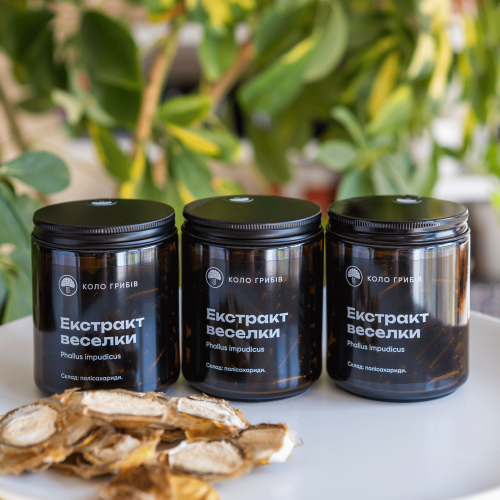
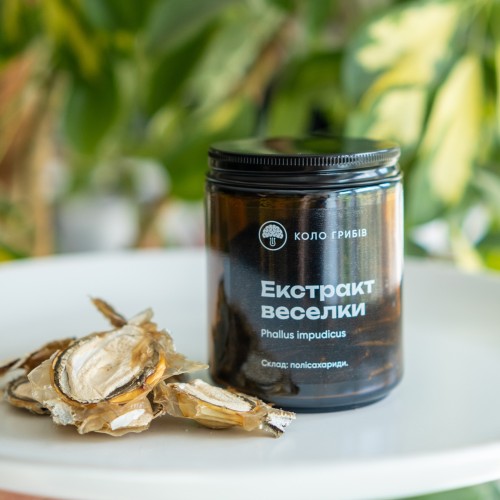
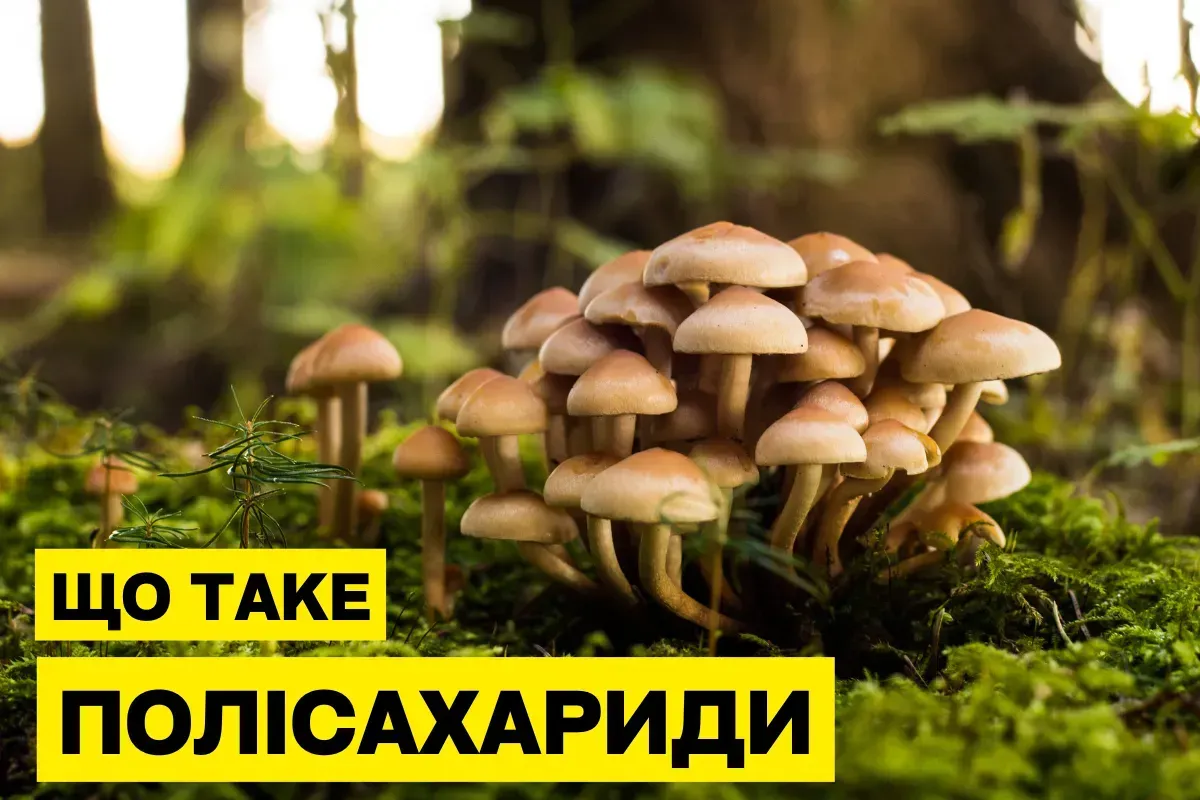

What are polysaccharides?
What are polysaccharides and how do they differ from beta-glucans?
Polysaccharides: the basis of cellular energy and protection
Polysaccharides are large molecules composed of numerous chains of simple sugars (glucose, galactose, mannose, etc.).
They can be compared to "building blocks" in the world of carbohydrates: they form the cell walls of fungi, plants, and bacteria.
In mushrooms, polysaccharides are the most studied group of bioactive substances, which have a wide range of effects.
Main properties of polysaccharides:
-
stimulation of the immune system;
-
antioxidant protection;
-
support of gut microbiota (prebiotic effect);
-
anti-inflammatory action;
-
assistance in cell recovery after toxic damage.
Thus, "polysaccharides" represent a broad group of substances, where beta-glucans are only one of the most important representatives.
Beta-glucans: “specialized” polysaccharides
Beta-glucans are one type of polysaccharide.
Their peculiarity lies in their structure: they consist exclusively of glucose molecules connected in a specific way (β-linkages).
Thanks to this structure, beta-glucans can:
-
activate immune cells (macrophages, NK cells, dendritic cells);
-
trigger the production of anti-inflammatory immune mediators;
-
increase the body’s resistance to viruses, bacteria, fungi, and even cancer cells.
The main difference in therapeutic action
Polysaccharides in general work more comprehensively: they act as antioxidants, prebiotics, protect cells from damage, and reduce inflammation. Their effect is more "gentle" and versatile.
Beta-glucans are a narrowly targeted group of polysaccharides that have the most powerful immunomodulatory effect. They not only support but also "train" the immune system, teaching it to respond more quickly to threats.
- When we say “mushroom polysaccharides”, we mean a whole spectrum of beneficial compounds that work in different directions: antioxidant, anti-inflammatory, and protective.
- When we highlight “beta-glucans”, we emphasize above all their role in strengthening immunity and providing anti-cancer protection.
That is why mushroom extract labels often indicate both the total percentage of polysaccharides and, separately, the content of beta-glucans. This helps to understand whether the product will act more as a general antioxidant or as a powerful immune stimulator.
Comparison of Polysaccharides and Beta-Glucans
| Characteristic | Polysaccharides | Beta-Glucans |
|---|---|---|
| What are they? | A large group of complex carbohydrates (chains of different sugars: glucose, galactose, mannose, etc.) | A specific type of polysaccharides made exclusively of glucose molecules |
| Structure | Diverse, includes many types of bonds | Built on β-bonds between glucose molecules |
| Main function | Complex: antioxidant, anti-inflammatory, restorative, prebiotic | Strongest immunomodulatory effect: activation of macrophages, NK cells, anti-tumor protection |
| Scope of action | Broad — affect cells, microbiota, antioxidant processes | Narrow — train the immune system to react faster to threats |
| Sources in mushrooms | Most medicinal mushrooms (lion’s mane, reishi, shiitake, cordyceps) | Highest in reishi, shiitake, turkey tail |
| Application | General wellness, liver support, reducing inflammation, recovery after intoxication | Immune support, infection prevention, aid in cancer and viral diseases |
| Effect | “Mild” and versatile | Strong, immune-specific |
In our store, we went even further: our extracts have a strictly standardized composition — 50% polysaccharides and 20% beta-glucans. And to make them maximally effective, we added unique compounds that are almost absent in other products on the Ukrainian market.
-
In Hericium erinaceus extract: 3% erinacines — compounds that stimulate the growth and regeneration of nerve cells, support memory, concentration, and brain function.
Read more about the properties of this mushroom in the article: Properties of Lion’s Mane mushroom
-
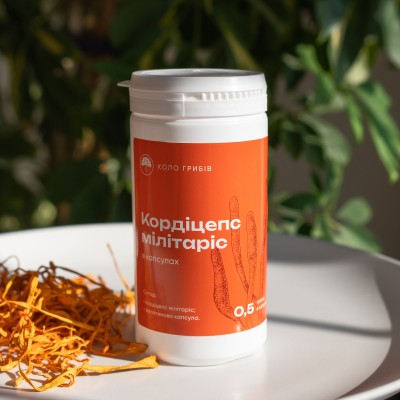
In Cordyceps militaris extract: 3% cordycepin — boosts energy, endurance, improves cellular oxygenation, and reduces inflammation.
Thus, our extracts not only contain a high concentration of classic polysaccharides and beta-glucans but are also enriched with rare bioactive compounds, making them especially effective for health and body recovery.
‼️You have a unique opportunity to purchase rare polysaccharides of Lion's Mane, Cordyceps militaris, reishi and Turkey tail as part of an exclusive product from Fungi Circle - extracts, which include various polysaccharides, including beta-glucans, as well as erynacins of all kinds (Lion's Mane).
This information is for educational purposes only and is not medical advice. Always consult your doctor before taking any supplements.
❓ Frequently Asked Questions about Polysaccharides and Beta-Glucans
1. What is the difference between polysaccharides and beta-glucans?
Polysaccharides are a broad group of carbohydrates in mushrooms with antioxidant, anti-inflammatory, and restorative effects.
Beta-glucans are a special type of polysaccharide that most actively affect the immune system. That’s why they are always listed separately on labels.
2. Why is it important that your extracts contain erinacines and cordycepin?
Most mushroom extracts in Ukraine indicate only the total content of polysaccharides or beta-glucans. Our store’s extracts include additional unique compounds:
-
Erinacines (3%) in Hericium erinaceus — stimulate the growth of nerve cells, improve brain function, memory, and concentration.
-
Cordycepin (3%) in Cordyceps militaris — boosts energy and endurance, protects cells from inflammation.
These compounds make the extracts more effective and unique for the Ukrainian market.
3. How should these extracts be taken correctly?
It is recommended to take the extracts in courses lasting 1 to 3 months, depending on the goal:
-
For immunity and general strengthening — at least 4–6 weeks.
-
For supporting the brain and nervous system — from 2 months.
-
For energy and endurance — daily intake during periods of heavy load.
4. How do our extracts differ from mushroom powder?
Powder usually contains only 5–10% active compounds, with the rest being fiber and filler.
Standardized extracts have a concentration 5–10 times higher.
5. Can different mushroom extracts be combined?
Yes. For example: Hericium for the brain + Cordyceps for energy + Reishi for stress reduction. This creates a synergistic effect.
For each client individually, we draw up instructions according to his indicators and requests
Monthly Course:
- Lion's Mane Mushroom Extract buy 90 capsules
- Cordyceps militaris extract buy 90 capsules
- Extract of Shiitake buy 90 capsules
- Extract of Reishi buy 90 capsules
- Extract of Chaga caps buy 90 capsules
Other articles on the topic:
Contact us:
