
 Mushrooms
 Lion’s mane
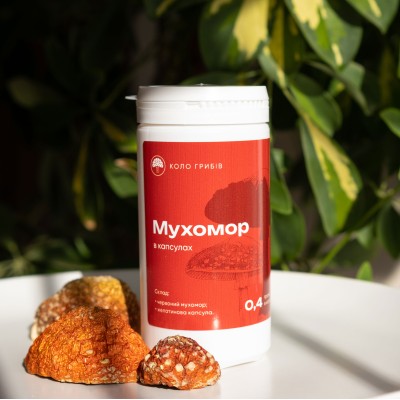
 Fly agaric
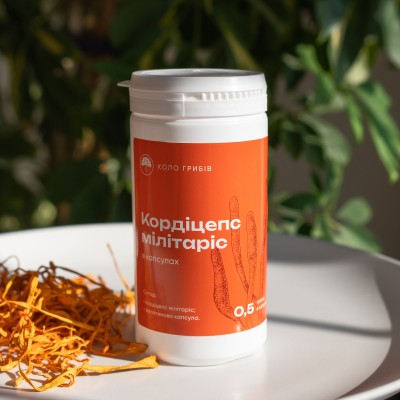
 Cordyceps militaris
 Reishi
 Turkey Tail (Trametes versicolor)
 Chaga
Chaga
 Chanterelle Mushroom
 Phallus Impudicus
 Shiitake
 Auricularia auricula
 Complexes
 For deep sleep
 For stress and nervous tension
 For energy, motivation, cheerfulness
 For libido and potency
 For brain function, increased concentration
 For the immune system
 For liver support
 For joints and ligaments
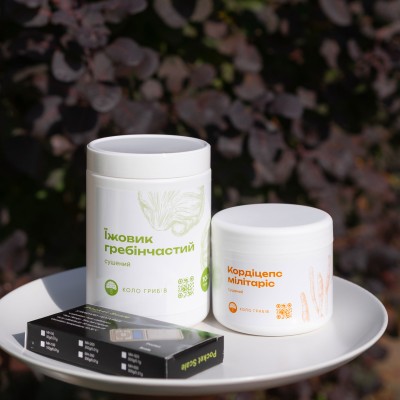
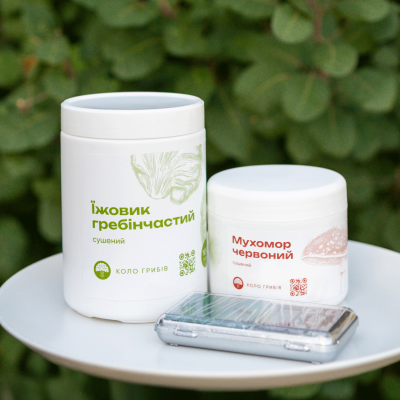
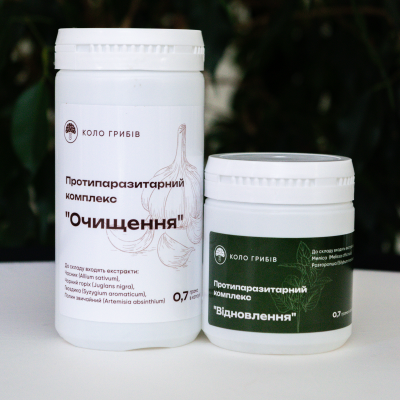
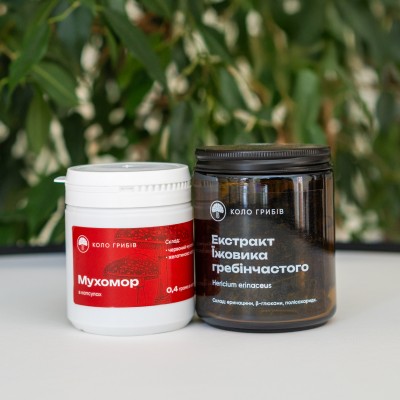
 Herbal products
 Vitamins
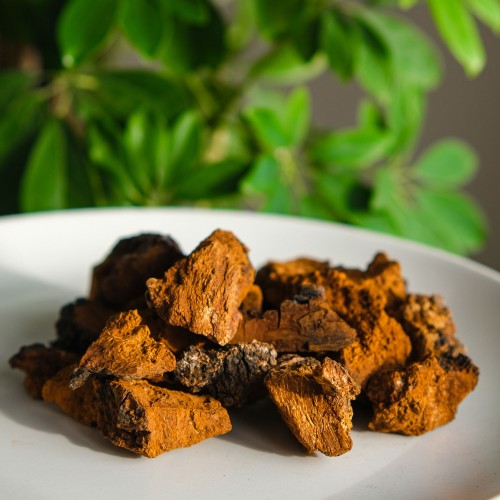
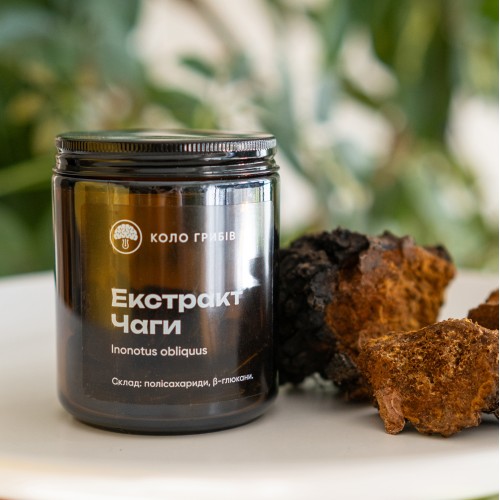
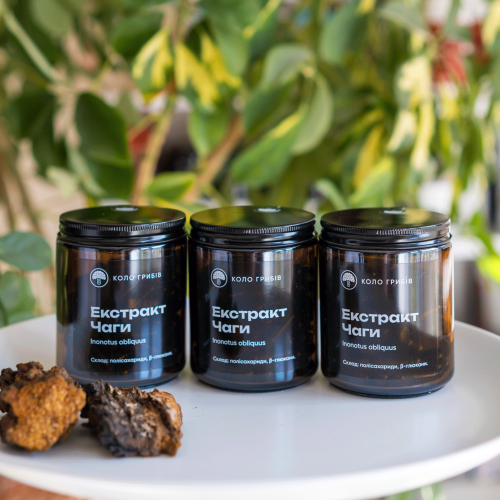
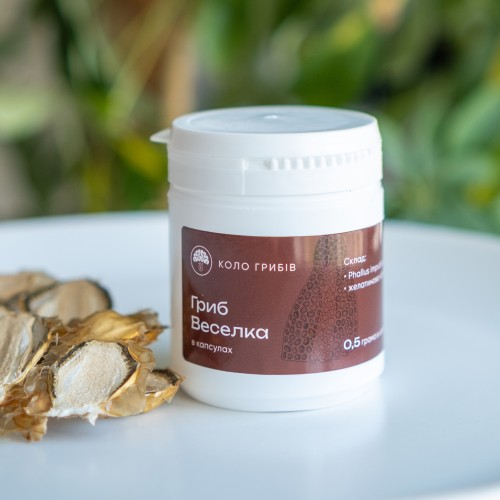
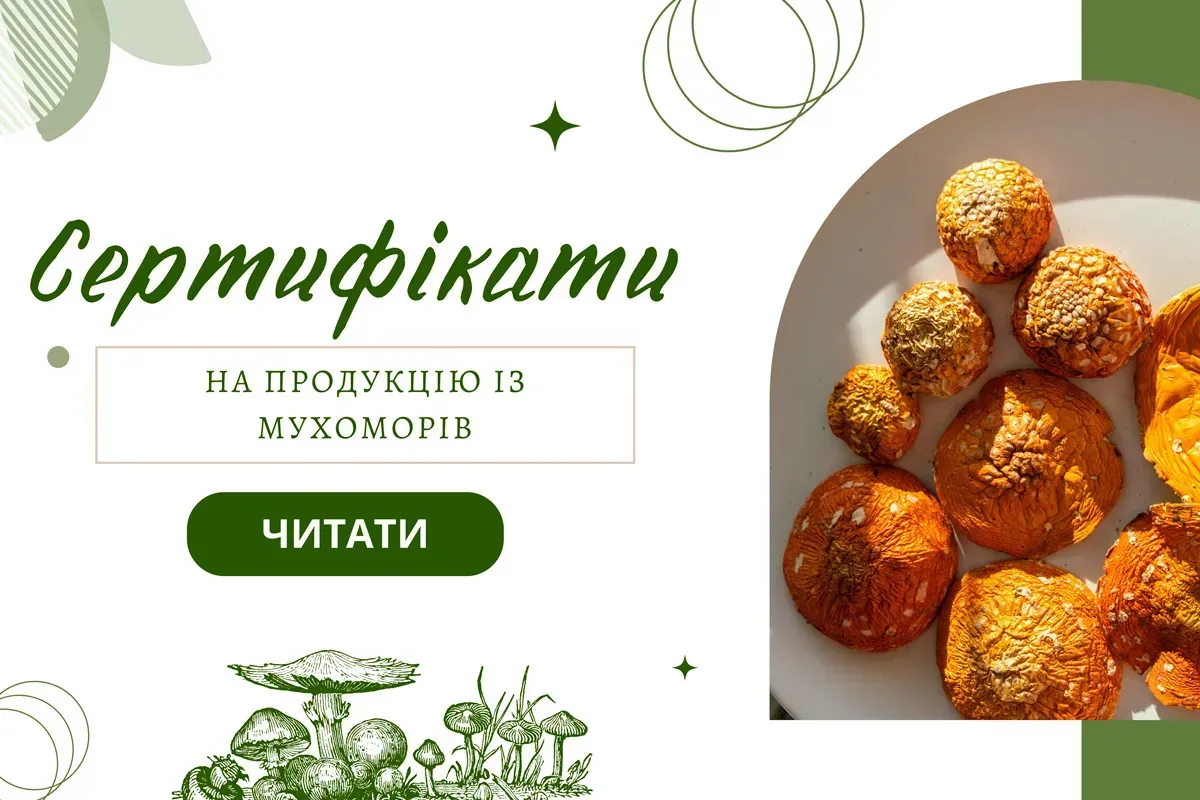

Our certificates for Amanita-based products
COMMENT ON EACH INDICATOR
1. Specific activity of cesium-137 (Cs-137):
Not detected (<2.40 Bq/kg)
Standard (specified by the customer): <2500 Bq/kg
Assessment:
A level below 2.4 Bq/kg is an ultralow value, practically background zero.
For comparison:
- EU permissible limit for mushrooms — 600 Bq/kg,
- Ukraine’s limit for dried mushrooms — 2500 Bq/kg,
- average level in wild mushrooms in Ukraine — 40–800 Bq/kg.
This means that this amanita:
is absolutely clean, with no traces of radioactive contamination,
is even lower than the background levels of most food products.
2. Specific activity of strontium-90 (Sr-90):
Not detected (<2.00 Bq/kg)
Standard (specified by the customer): <250 Bq/kg
Assessment:
No strontium detected.
In most wild mushrooms after rainfall or from radioactive areas, Sr-90 is often found at levels of 5–30 Bq/kg.
Here — complete absence, which indicates:
- a clean collection / production region,
- no radiological contamination,
- compliance with even the strictest sanitary standards.
COMMENT ON EACH INDICATOR
1. Detection of Salmonella spp. — NOT DETECTED
What this means:
Salmonella is one of the most dangerous foodborne pathogens.
Assessment:
Absolute norm.
Safe indicator.
2. Detection of Staphylococcus aureus — NOT DETECTED
What this is:
A bacterium that causes food poisoning.
Assessment:
Excellent.
The product contains no staphylococcus.
TRACE ELEMENTS / HEAVY METALS
Important: there are no official standards for amanita, as it is not an edible mushroom.
Therefore, the evaluation is based on:
- toxicological threshold levels for mushroom raw materials (EU/WHO),
- natural average concentrations of Amanita muscaria.
3. Mercury content (Hg): 0.63 mg/kg
Natural range for mushrooms: 0.02–1.5 mg/kg
EU limit for mushrooms: ≤0.80 mg/kg
Assessment:
Within natural levels.
Quite high, but does NOT exceed toxicological standards.
4. Cadmium content (Cd): 12.3 mg/kg
Natural range for Amanita: 5–30 mg/kg
EU limit for edible mushrooms: 2.0 mg/kg
But amanita is not consumed in kilograms, so toxicological limits cannot be applied directly.
Assessment:
Typical level for amanita.
5. Lead content (Pb): 0.13 mg/kg
EU limit for mushrooms: ≤0.30 mg/kg
Natural range: 0.05–2 mg/kg
Assessment:
Very low indicator.
Cleaner raw material than the average wild mushroom.
6. Arsenic content (As): 0.44 mg/kg
Standard (organic As in mushrooms): up to 1 mg/kg
Mushrooms predominantly contain non-toxic organic arsenobetaine.
Assessment:
Lower than the average for forest mushrooms (0.5–3 mg/kg).
Safe for raw material.
7. Copper content (Cu): 33.5 mg/kg
Natural range for mushrooms: 20–200 mg/kg
Copper is a natural trace element.
Assessment:
Normal level.
Safe, typical for wild mushrooms.
8. Zinc content (Zn): 112 mg/kg
Natural range for Amanita muscaria: 25–150 mg/kg
No official standards exist.
Assessment:
Value is fully within the natural range for amanita.
Zinc is not a toxic metal in such amounts.
Slightly above average, but absolutely typical for mushrooms growing in mineral-rich soils.
Our certificates for Hericium erinaceus products
COMMENTS ON ALL INDICATORS
1. Mercury content (Hg): NOT DETECTED (<0.02 mg/kg)
What this means:
Mercury is a toxic metal, typically found in mushrooms at 0.02–1.0 mg/kg depending on the region.
Assessment:
Perfectly clean indicator.
The value is below the detection limit, meaning complete absence of mercury in the sample.
2. Cadmium content (Cd): 0.046 mg/kg
Typical range for mushrooms: 0.05–2.0 mg/kg
EU limit for edible mushrooms: ≤0.20 mg/kg
Assessment:
Ultra-low, atypical level for mushrooms.
Lion’s mane usually accumulates cadmium, but here the value is 4–5 times lower than the food safety limit.
This indicates a clean cultivation substrate / clean harvesting region.
3. Lead content (Pb): NOT DETECTED (<0.1 mg/kg)
EU limit for mushrooms: ≤0.30 mg/kg
Typical concentration in wild mushrooms: 0.1–2 mg/kg
Assessment:
Complete absence of lead.
For wild mushrooms this is almost unheard of — a premium-quality raw material level.
4. Arsenic content (As): NOT DETECTED (<0.05 mg/kg)
Standard for organic arsenic in mushrooms: ≤1 mg/kg
Most mushrooms contain 0.3–2.0 mg/kg in the form of non-toxic arsenobetaine.
Assessment:
Absolute purity — no traces of arsenic.
Significantly better than average mushroom values (which typically accumulate arsenic).
5. Copper content (Cu): 5.60 mg/kg
Natural range for lion’s mane: 5–30 mg/kg
Copper is an essential trace element, often elevated in mushrooms.
Assessment:
Lower edge of the normal range.
The mushroom was grown or harvested in a very clean environment.
No toxicological risks.
6. Zinc content (Zn): 25.2 mg/kg
Typical range for Hericium erinaceus: 20–150 mg/kg
Zinc is a beneficial trace element and NOT considered a heavy metal.
Assessment:
Perfectly natural indicator.
25 mg/kg is a low, environmentally clean level for lion’s mane.
A good marker of “normal” organic mushroom growth.
