 Mushrooms
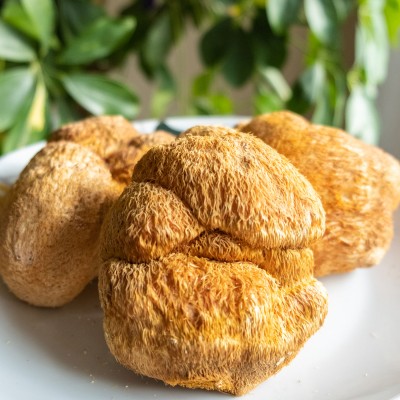
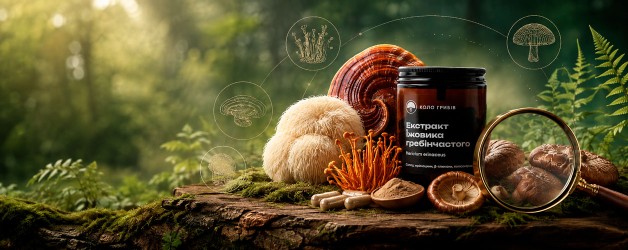
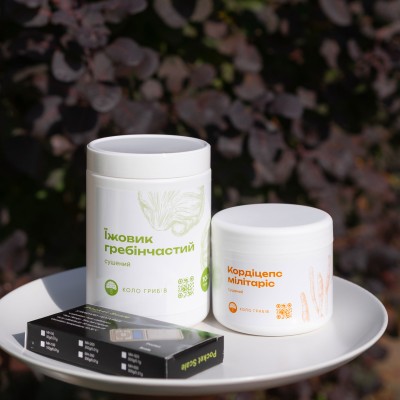
 Lion’s mane
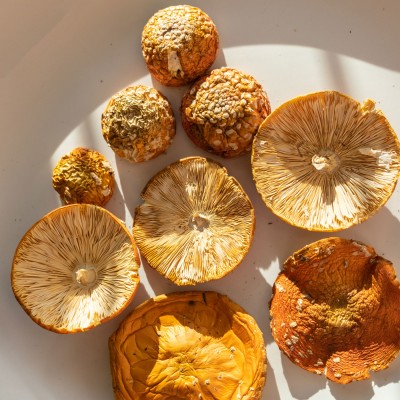
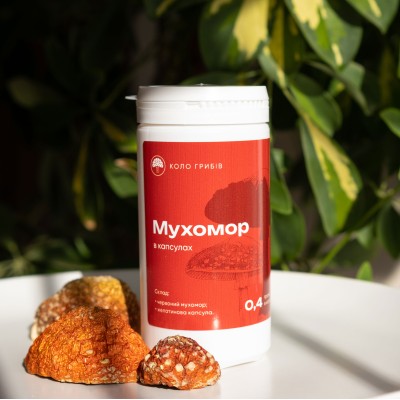
 Fly agaric
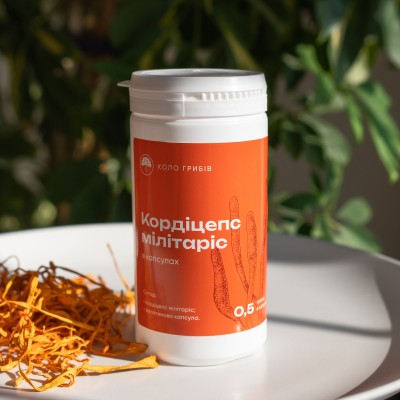
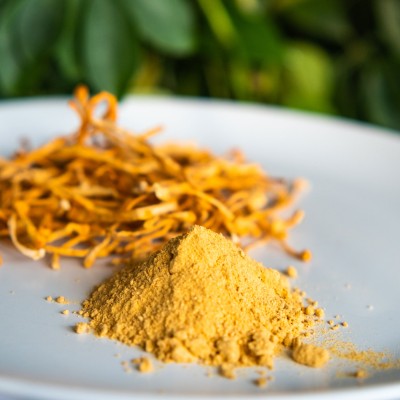
 Cordyceps militaris
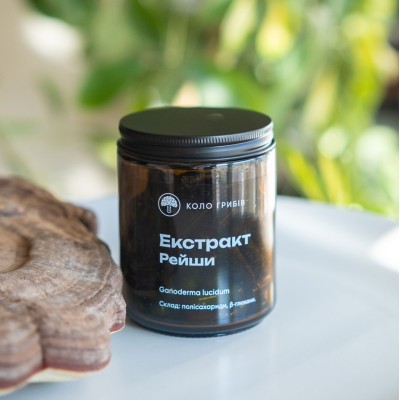
 Reishi
 Turkey Tail (Trametes versicolor)
 Chaga
Chaga
 Chanterelle Mushroom
 Phallus Impudicus
 Shiitake
 Auricularia auricula
 Complexes
 For deep sleep
 For stress and nervous tension
 For energy, motivation, cheerfulness
 For libido and potency
 For brain function, increased concentration
 For the immune system
 For liver support
 For joints and ligaments
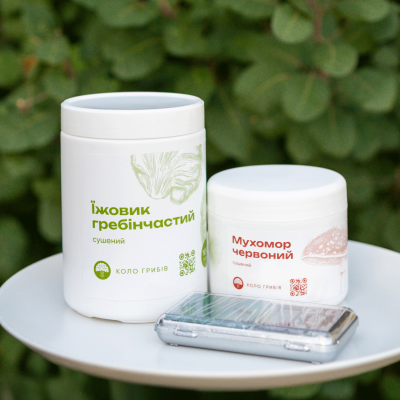
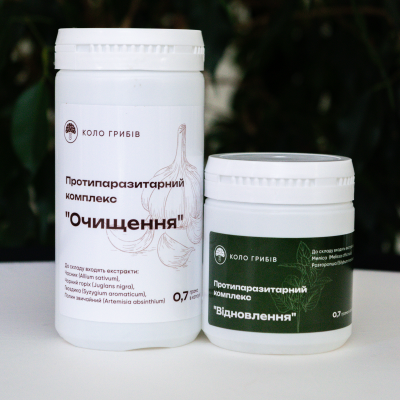
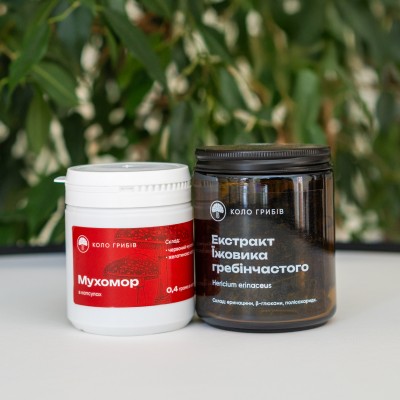
 Herbal products
 Vitamins
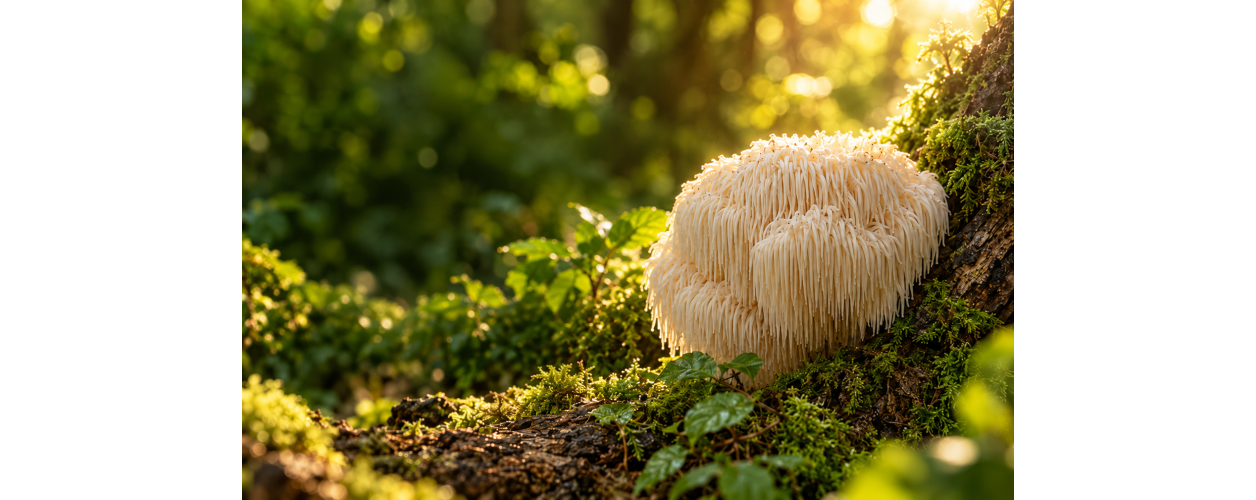

Lion’s Mane mushroom (Hericium erinaceus) is known primarily for its neurotrophic activity and potential effects on the nervous system. In laboratory and preclinical studies, its extracts and individual bioactive compounds affected neurotrophic signaling pathways, nerve outgrowth, and peripheral nerve repair processes.
At the same time, some people describe unusual skin sensations after taking Lion’s Mane: tingling, “pins and needles,” increased sensitivity, or itching. This naturally raises the question: can Lion’s Mane mushroom itself cause such a reaction?
To date, there is no direct clinical evidence that oral intake of Hericium erinaceus causes itching through increased NGF. At the same time, this hypothesis has a biological basis: Lion’s Mane affects neurotrophic processes and peripheral nerve regeneration, while nerve growth factor NGF is involved in regulating the sensitivity of sensory nerve endings in the skin.
There is also another important explanation: itching after taking the mushroom may be related not to the nervous system, but to an allergic reaction to the mushroom itself or to components of a specific product. Therefore, these mechanisms should not be mixed together.
Can Lion’s Mane cause itching – short answer
Current scientific data only allow us to speak about a possible mechanism, not a proven side effect.
We have two separate groups of data:
- Hericium erinaceus can influence neurotrophic processes, including those related to NGF, neurite outgrowth, and peripheral nerve regeneration.
- NGF is involved in the function of sensory nerve fibers in the skin and, under certain conditions, may alter their sensitivity and be involved in itch mechanisms.
It is at the intersection of these two groups of data that the hypothesis arises about a possible connection between Lion’s Mane, NGF, changes in skin sensory sensitivity, and the appearance of itching. Schematically, it can be shown as follows:

How is NGF related to skin sensitivity and itching?
What is NGF?
NGF – nerve growth factor.
It is a neurotrophic protein involved in the development, survival, and function of certain types of neurons.
When NGF is discussed in the context of Lion’s Mane, the focus is most often on the brain, neuroplasticity, and support of nerve cells. But its action is not limited to the central nervous system.
NGF is also important for peripheral sensory nerves – nerve fibers that transmit information to the brain about:
- touch;
- temperature;
- pain;
- mechanical irritation;
- tingling;
- itching.
In the skin, sensory nerve endings are located very close to keratinocytes and immune cells, between which signaling molecules are constantly exchanged.
NGF is one of the factors capable of influencing the growth, activity, and sensitivity of these nerve fibers.
We discussed the mushroom’s neurotrophic properties, its bioactive compounds, and its studied effects on the nervous system in more detail in the article “Lion’s Mane mushroom: properties, benefits for the brain and nervous system”.
What happens when NGF increases in the skin?
One of the best-studied models of NGF interaction with skin nerves can be observed in atopic dermatitis.
In normal skin, there is a balance between factors that stimulate the growth of nerve fibers and substances that limit it.
NGF is one of the factors that can support nerve fiber growth.
One of the signals that, on the contrary, restrains their sprouting is semaphorin-3A (Sema3A).
In atopic dermatitis, this balance may be disrupted: NGF levels increase, while the activity of signals that limit nerve fiber growth decreases.
As a result, sensory nerve endings may penetrate more actively into the upper layers of the skin, potentially making it more sensitive to irritation.
This does not mean that any increase in NGF automatically causes itching. But such data show that NGF is part of the system that regulates skin sensory sensitivity.
NGF and changes in skin innervation
In a study by Tanaka and Matsuda (2005), mice with itchy dermatitis-like skin lesions had significantly higher NGF levels than animals without such changes.
The researchers also observed more active sprouting of sensory nerve fibers from the dermis toward the epidermis and suggested that NGF-dependent changes in innervation may be one of the factors in the development of itching and abnormal skin sensitivity.
Similar processes have also been observed in humans.
In the study by Kinkelin et al. (2000), the researchers examined the skin of patients with allergic contact eczema. In inflamed areas, NGF levels were significantly higher than in normal skin.
At the same time, the scientists found increased nerve fiber length in the epidermis and a greater number of nerve endings with the GAP43 marker, which is associated with axon growth.
The authors interpreted this as evidence of NGF-mediated nerve fiber sprouting in inflamed human skin.
These data support the connection between NGF, innervation, and skin sensitivity. However, they were obtained in dermatological diseases, not during intake of Hericium erinaceus.
Therefore, they can be used to explain a possible mechanism, but not as proof that Lion’s Mane causes itching through NGF.
What have studies of NGF and itching in humans shown?
Experiments in which NGF was injected directly into the skin of healthy people are especially interesting. They make it possible to see how changes in local NGF signaling affect sensory sensitivity.
NGF may increase mechanical sensitivity
In a study by Andersen et al. (2018), 16 healthy volunteers received intradermal NGF injections in the forearm area, and the response was compared with a control area where saline was used.
After NGF sensitization, the researchers recorded:
- mechanical hyperalgesia – increased pain sensitivity to mechanical irritation;
- hyperknesis – an enhanced feeling of itching in response to a mechanical stimulus.
At the same time, NGF did not enhance itching equally in response to all stimuli.
For example, no similar enhancement of the response to histamine or irritation with cowhage spicules was found.
This is an important point.
NGF probably does not simply “turn on itching,” but may change the sensitivity threshold of the sensory system, causing certain stimuli to be felt more strongly.
Theoretically, sensitized skin may react more sharply to:
- friction;
- touch;
- pressure;
- point mechanical stimuli;
- stimuli that were previously barely noticeable.
But NGF does not always enhance itching
The results of another experiment showed that the relationship between NGF and itching is more complex.
In a study by Solinski, Rukwied, and Schmelz (2021), scientists tested whether NGF-sensitized skin in healthy volunteers becomes more sensitive to various substances that provoke itching.
NGF did not enhance itching in response to most of the tested irritants. In some tests, the pain response changed more noticeably.
This means that NGF likely affects the neural mechanisms of pain and itching differently.
Therefore, increased NGF activity alone does not mean that the skin will necessarily start to itch.
With prolonged inflammation or altered innervation, its role may be more significant, but in a healthy person the mechanism is not so straightforward.
How does Lion’s Mane mushroom affect NGF and the nervous system?
The neurotrophic properties of Hericium erinaceus have been studied for several decades.
One of the key studies was the work by Mori et al. (2008), in which Hericium erinaceus extract was added to human astrocytoma 1321N1 cells.
The researchers found that the extract:
- increased NGF mRNA expression;
- increased secretion of NGF protein;
- and the medium obtained from treated cells stimulated neurite outgrowth in PC12 cells.
In the same study, mice received feed containing 5% Lion’s Mane powder for seven days. After that, the researchers recorded increased NGF expression in the hippocampus.
But the neurotrophic action of Lion’s Mane is not limited only to potential stimulation of NGF synthesis.
The fruiting bodies of the mushroom contain different groups of bioactive compounds capable of affecting nerve cells through different mechanisms.
For example, in a study by Phan et al. (2014), hericenones – a group of secondary metabolites from the fruiting bodies of Hericium erinaceus – were studied.
In the presence of a small amount of NGF, some of these compounds enhanced neurite outgrowth in PC12 cells and affected the MEK/ERK and PI3K/Akt signaling pathways, which are associated with nerve cell growth and survival.
Therefore, the idea that “Lion’s Mane simply increases NGF” is too simplified.
Some bioactive compounds may influence the formation of neurotrophic factors, while others may change how nerve cells respond to already existing signals or act through other mechanisms.
Therefore, it is more accurate to speak about the neurotrophic and neuroregenerative activity of Hericium erinaceus, rather than reducing its action only to NGF.
Since the concentration and composition of active substances depend on the form of the raw material and production technology, we separately discussed how to choose a high-quality medicinal mushroom extract.
Does Lion’s Mane affect peripheral and sensory nerves?
This is especially important for the question of skin sensitivity, because sensory signals from the skin are transmitted specifically by the peripheral nervous system.
In a study by Wong et al. (2016), researchers studied the repair of an injured peroneal nerve in rats.
After injury, the animals were given an aqueous extract of Hericium erinaceus orally every day.
Against the background of its intake, the researchers recorded higher activity of signaling pathways in dorsal root ganglion neurons:
- Akt;
- MAPK;
- c-Jun;
- c-Fos.
These pathways are involved in nerve cell survival, nerve outgrowth, and regeneration after injury.
In the injured nerve, protein synthesis processes necessary for axon repair were also enhanced.
It is especially interesting that some of the changes were found specifically in the dorsal root ganglia – DRG.
What are dorsal root ganglia and why are they important?
Dorsal root ganglia contain the cell bodies of sensory neurons that receive information from the skin and other tissues and transmit it to the central nervous system.
These neurons participate in the perception of:
- pain;
- temperature;
- mechanical stimuli;
- touch;
- itching.
The results of Wong et al. show that the neurotropic action of Hericium erinaceus in experimental models is not limited only to the brain and may relate to peripheral nerve repair processes.
In an earlier review by Wong et al. (2012), the authors summarized experimental data on peripheral nerve injury. In rat models, oral intake of Hericium erinaceus was associated with better axon regeneration, faster recovery of limb function, and reinnervation of neuromuscular junctions.
A systematic review by Taib et al. (2026) also showed that among the studied medicinal mushrooms, Hericium erinaceus has the largest amount of experimental data regarding peripheral nerve repair.
We discussed these studies in more detail in the article “How Lion’s Mane mushroom naturally helps repair nerves”.
At the same time, data on the regeneration of injured nerves in animals do not prove that taking Lion’s Mane in a healthy person causes sprouting of skin nerve endings or itching.
This is only another part of the mechanistic chain that makes such a hypothesis biologically plausible.
Itching from Lion’s Mane: a neurosensory reaction or allergy?
This is one of the most important practical points.
Not every case of itching after taking Lion’s Mane should be explained by NGF or the nervous system.
Itching can have many causes – from dryness and skin irritation to an allergic reaction.
Therefore, two situations can be conditionally distinguished.
Potential neurosensory reaction
If we assume a neurosensory mechanism, it could theoretically manifest as:
- mild tingling;
- “pins and needles”;
- unusual skin sensitivity;
- an enhanced feeling of touch or friction;
- itching without visible skin changes.
However, such a reaction specifically to oral intake of Lion’s Mane has not been clinically confirmed.
Therefore, itching or tingling alone is not enough to conclude that the cause is related to NGF.
Signs of a possible allergic reaction
The following are more concerning:
- hives;
- pronounced rash;
- noticeable redness;
- swelling of the lips;
- swelling of the tongue or face;
- a feeling of tightness in the throat;
- difficulty breathing;
- rapid worsening of symptoms.
Such manifestations should not be explained as “nerve repair,” NGF stimulation, or a normal reaction to the mushroom.
This is especially important because allergic reactions and neurosensory sensations have different mechanisms and require different approaches.
Does itching mean that Lion’s Mane is working?
No.
Based on the available studies, itching cannot be used as a marker of the effectiveness of Hericium erinaceus.
It is incorrect to claim:
“If the skin itches, it means nerves are growing.”
No such diagnostic criterion exists.
Itching also does not mean that NGF has increased in a particular person.
Possible causes include:
- dry skin;
- mechanical irritation;
- allergic reaction;
- individual sensitivity;
- dermatological conditions;
- neuropathic mechanisms;
- other factors unrelated to Lion’s Mane intake.
Therefore, the absence of any subjective sensations also does not mean that the product “is not working.”
How long can itching after Lion’s Mane last?
To date, there are no high-quality clinical studies that would allow us to establish the typical duration of itching or increased sensitivity after taking Hericium erinaceus.
In experiments with direct NGF injection into the skin, changes in sensory sensitivity could persist for some time.
But these results cannot be directly transferred to oral intake of Lion’s Mane, because the route of exposure, NGF concentration, and biological conditions are fundamentally different.
What should you do if itching appears after Lion’s Mane?
Mild itching without a rash alone is not enough to determine its cause.
First of all, it is worth assessing whether there are other symptoms:
- redness;
- rash;
- hives;
- swelling;
- difficulty breathing;
- rapid worsening of the reaction.
If such signs are present, the reaction should be considered primarily as possibly allergic, rather than as a manifestation of the mushroom’s neurotrophic action. Swelling of the lips, tongue, or throat, breathing problems, or rapid worsening of the condition require urgent medical attention.
If the itching is pronounced, worsens, recurs with each intake, or does not disappear for a long time, the cause of the reaction should be discussed with a doctor.
And conversely: even in the absence of visible skin changes, we still cannot confidently claim that itching is specifically related to NGF or the effect of Lion’s Mane on sensory nerves.
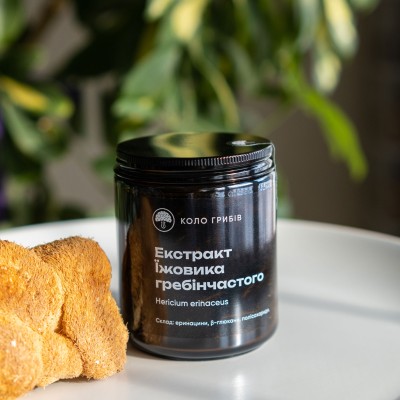
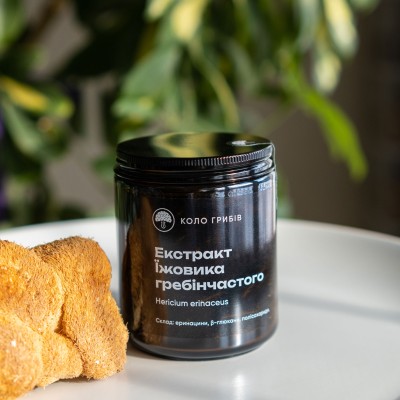
On the page of our Lion’s Mane mushroom extract, you can separately review the product composition and the declared standardization of active components.
What is known today: conclusions
Scientific data allow us to make several fairly confident conclusions.
First.
Hericium erinaceus has neurotrophic activity and, in laboratory and animal models, affects NGF-dependent processes, neurite outgrowth, and peripheral nerve regeneration.
Second.
NGF is an important regulator of peripheral sensory nerves and participates in mechanisms that determine skin sensitivity.
Third.
In dermatological models, elevated NGF levels may be accompanied by nerve fiber sprouting, changes in skin innervation, and increased itching.
Fourth.
In healthy people, local NGF administration can change mechanical and pain sensitivity and, under certain conditions, enhance mechanically induced itching.
Fifth.
There are experimental data showing that Hericium erinaceus affects peripheral nerve regeneration processes and signaling pathways in sensory neurons of the dorsal root ganglia.
But the most important point: to date, there is no direct clinical evidence that taking Lion’s Mane increases NGF specifically in human skin and thereby causes itching.
Therefore, the most accurate wording is:
Lion’s Mane mushroom has neurotrophic activity and can influence processes related to NGF and peripheral nerves. Since NGF is involved in regulating the sensitivity of skin nerve endings and itch mechanisms, it can be assumed that in some people, changes in neurosensory sensitivity may potentially manifest as tingling or itching. However, this mechanism specifically for oral intake of Hericium erinaceus currently remains a scientifically grounded hypothesis, not a proven side effect.
It is equally important to remember that itching may have a completely different origin, including an allergic one. Therefore, it should not be automatically interpreted as a sign of Lion’s Mane affecting the nervous system.
Frequently asked questions about Lion’s Mane mushroom and itching
Can Lion’s Mane mushroom cause itching?
To date, there are no clinical studies proving that oral intake of Hericium erinaceus directly causes itching through increased NGF. At the same time, Lion’s Mane has neurotrophic activity, and NGF is involved in regulating the sensitivity of sensory nerve endings in the skin. Therefore, this mechanism can be considered a scientifically grounded hypothesis, but not a proven side effect.
Why can the skin tingle or itch after Lion’s Mane?
There may be several reasons. Theoretically, this could be related to a change in the sensory sensitivity of nerve endings, but there is currently no direct confirmation of this mechanism for Lion’s Mane. Itching may also occur due to skin irritation, individual sensitivity, or an allergic reaction.
Does itching after Lion’s Mane mean that it is working?
No. Itching is not an indicator of Lion’s Mane effectiveness and does not prove that NGF has increased in a person or that nerve fibers are growing. Using itching as a sign that Lion’s Mane is “working” is scientifically incorrect.
How to distinguish increased skin sensitivity from an allergy to Lion’s Mane?
Mild tingling or unusual sensitivity without visible skin changes alone does not make it possible to determine the cause of the reaction. The appearance of hives, a pronounced rash, redness, swelling of the lips, tongue, or face, tightness in the throat, or difficulty breathing is more consistent with a possible allergic reaction and requires appropriate medical evaluation.
How long can itching after Lion’s Mane last?
There are currently no reliable clinical data that would allow us to establish the typical duration of such a reaction after taking Hericium erinaceus. Experiments with direct NGF injection into the skin cannot be directly applied to oral intake of Lion’s Mane.
What should you do if itching appears after taking Lion’s Mane?
It is worth assessing whether the itching is accompanied by a rash, hives, redness, swelling, or breathing difficulties. If signs of a possible allergic reaction appear, the reaction should not be explained as “adaptation” or the action of NGF. If the symptoms are pronounced, worsen, or do not disappear, the cause should be discussed with a doctor.
Scientific sources
- Mori K. et al. (2008). Nerve growth factor-inducing activity of Hericium erinaceus in 1321N1 human astrocytoma cells. Biological & Pharmaceutical Bulletin, 31(9), 1727–1732. DOI: 10.1248/bpb.31.1727
- Phan C.W. et al. (2014). Hericium erinaceus (Bull.: Fr.) Pers. cultivated under tropical conditions: isolation of hericenones and demonstration of NGF-mediated neurite outgrowth in PC12 cells via MEK/ERK and PI3K-Akt signaling pathways. Food & Function, 5(12), 3160–3169. DOI: 10.1039/C4FO00452C
- Szućko-Kociuba I. et al. (2023). Neurotrophic and Neuroprotective Effects of Hericium erinaceus. International Journal of Molecular Sciences, 24(21), 15960. DOI: 10.3390/ijms242115960
- Wong K.H. et al. (2011). Peripheral Nerve Regeneration Following Crush Injury to Rat Peroneal Nerve by Aqueous Extract of Medicinal Mushroom Hericium erinaceus (Bull.: Fr.) Pers.. Evidence-Based Complementary and Alternative Medicine, 2011, 580752. DOI: 10.1093/ecam/neq062
- Wong K.H. et al. (2012). Neuroregenerative potential of lion's mane mushroom, Hericium erinaceus (Bull.: Fr.) Pers., in the treatment of peripheral nerve injury: a review. International Journal of Medicinal Mushrooms, 14(5), 427–446. DOI: 10.1615/IntJMedMushr.v14.i5.10
- Wong K.H. et al. (2016). Hericium erinaceus (Bull.: Fr.) Pers., a medicinal mushroom, activates peripheral nerve regeneration. Chinese Journal of Integrative Medicine, 22(10), 759–767. DOI: 10.1007/s11655-014-1624-2
- Taib N.A.B. et al. (2026). Application of Medicinal Mushrooms for the Treatment of Peripheral Nerve Injury: A Systematic Review. Medical Sciences, 14(1), 42. DOI: 10.3390/medsci14010042
- Tominaga M., Takamori K. (2014). Itch and nerve fibers with special reference to atopic dermatitis: therapeutic implications. The Journal of Dermatology, 41(3), 205–212. DOI: 10.1111/1346-8138.12317
- Tanaka A., Matsuda H. (2005). Expression of nerve growth factor in itchy skins of atopic NC/NgaTnd mice. Journal of Veterinary Medical Science, 67(9), 915–919. DOI: 10.1292/jvms.67.915
- Kinkelin I. et al. (2000). Increase in NGF content and nerve fiber sprouting in human allergic contact eczema. Cell and Tissue Research, 302(1), 31–37. DOI: 10.1007/s004410000202
- Andersen H.H. et al. (2018). UVB- and NGF-induced cutaneous sensitization in humans selectively augments cowhage- and histamine-induced pain and evokes mechanical hyperknesis. Experimental Dermatology, 27(3), 258–267. DOI: 10.1111/exd.13508
- Solinski H.J., Rukwied R., Schmelz M. (2021). Microinjection of pruritogens in NGF-sensitized human skin. Scientific Reports, 11(1), 21490. DOI: 10.1038/s41598-021-00935-x